When Is a Functional Prototype Necessary for a Custom EVA Case?
Learn when a functional prototype is needed for a custom EVA case and what should be checked before approving the case for production.
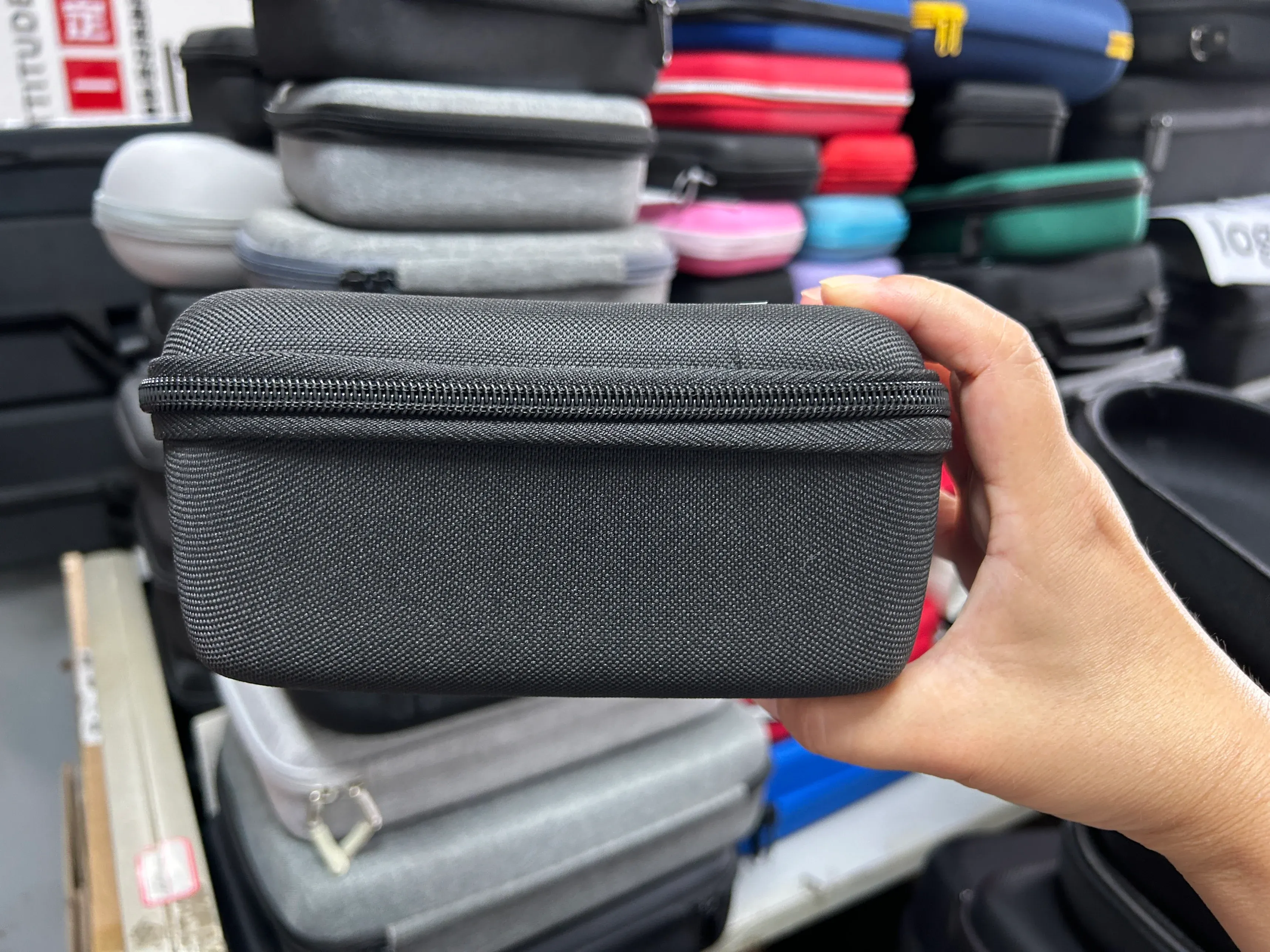
When developing a custom EVA case with a fitted interior, product dimensions, photos and 3D files can help establish the initial case direction. But they cannot always confirm how the actual product will fit inside the finished case.
For projects where fit, closure and interior retention are important, a functional prototype is usually recommended before mass production.
The purpose is not simply to see what the case looks like. It is to check how the real product, accessories and case work together before production approval.
What Can Be Evaluated Before a Functional Prototype?
Before sampling, a preliminary evaluation can often be made using the information provided by the buyer.
Useful information includes:
- Product dimensions (L × W × H)
- Clear product photos
- STEP/STP files, if available
- Accessory list and dimensions
- Preferred interior arrangement
- Estimated order quantity
- Target purchasing timeline
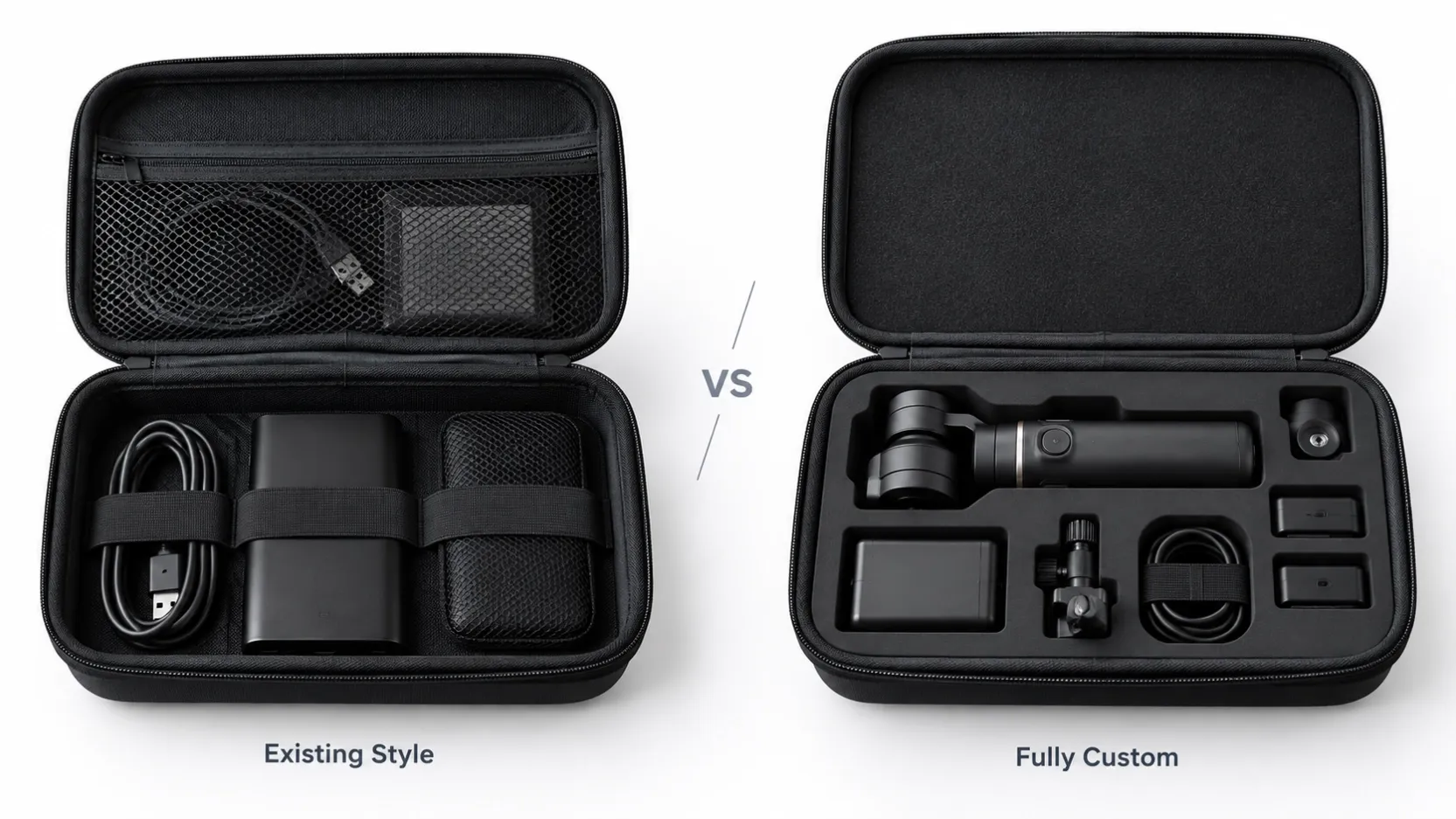
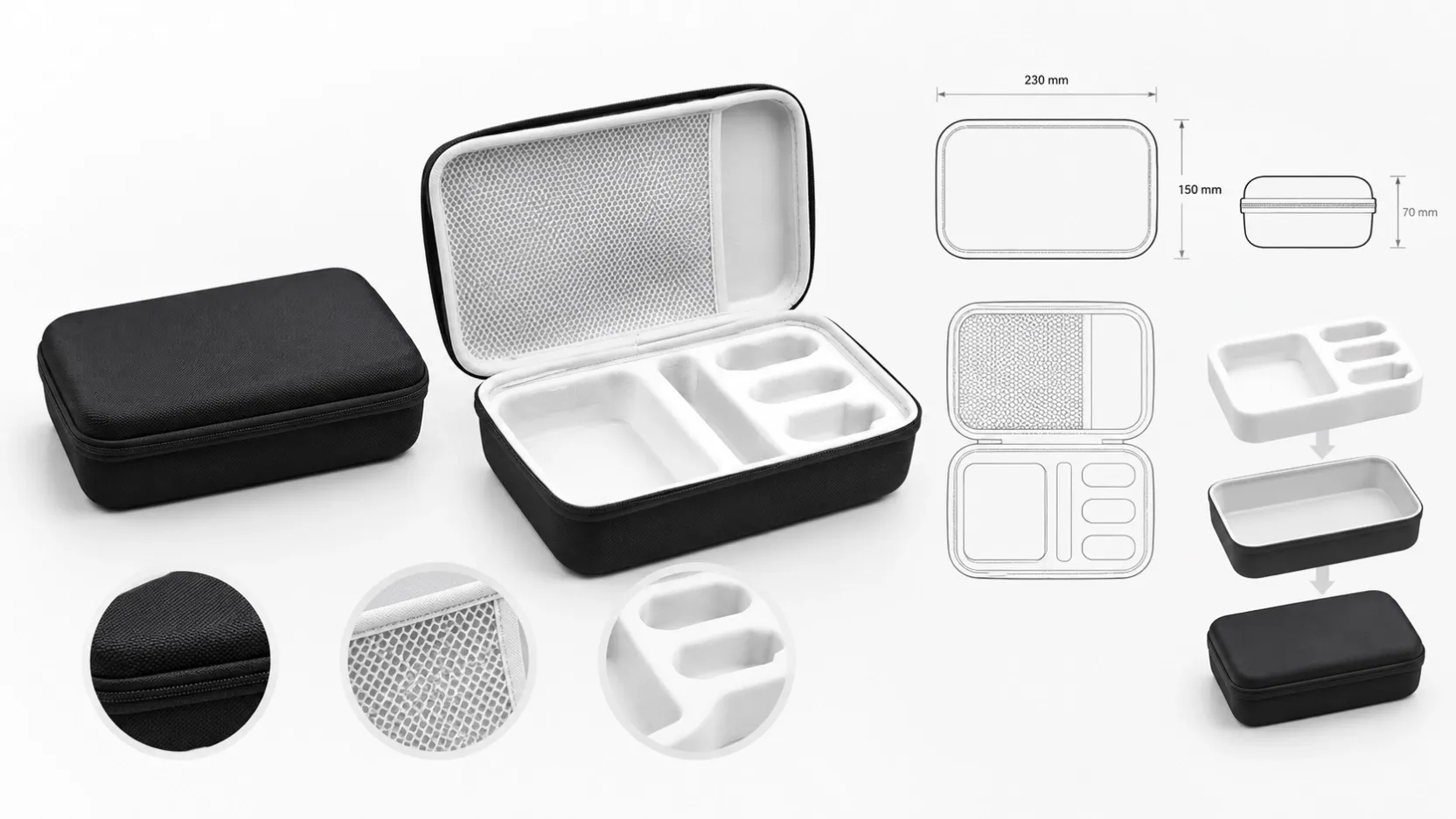
Based on this information, it is possible to discuss the approximate case size, existing mold or fully custom direction, interior layout and foam concept.
A preliminary layout is useful for feasibility discussion, but it is not a final production-fit guarantee.
What Does a Functional EVA Case Prototype Verify?
Once the project moves into functional sampling, the case can be checked with the actual equipment and accessories.
1. Actual Product Fit
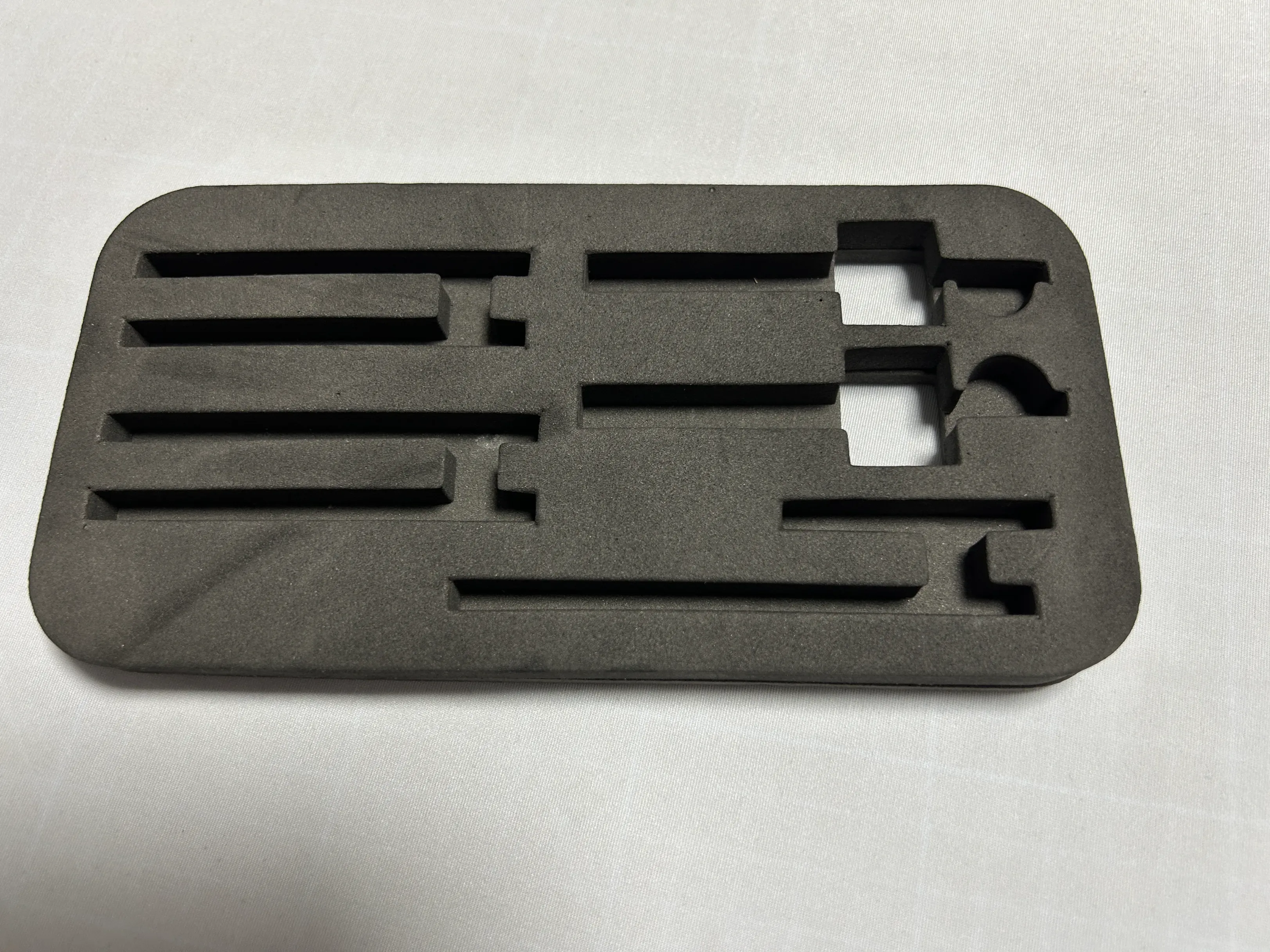
The prototype helps confirm whether the product sits correctly inside the foam or fitted interior. This is especially important for products with irregular shapes or detailed surface features.
2. Case Closure
A layout may appear workable on a drawing while still creating interference when the lid is closed. The functional sample helps verify that the complete equipment set fits within the available internal space.
3. Pressure and Clearance
Screens, buttons, knobs, connectors and other sensitive areas may require additional clearance. The prototype helps identify unwanted contact or pressure before production.
4. Foam Retention
The product should be held securely without making normal removal unnecessarily difficult. Actual sampling helps evaluate the balance between retention and accessibility.
5. Accessory Organization
Chargers, probes, cables, adapters and other accessories should also be checked as part of the complete kit. Flexible cables and irregular accessories can behave differently in a real case than they appear in a layout.
When Is a Functional Prototype Especially Important?
Functional sampling becomes particularly valuable when the project involves:
- Precision-fitted foam inserts
- Irregular product geometry
- Screens, buttons, knobs or protruding connectors
- Multiple devices or accessories in one case
- Limited internal space
- A new custom case size or structure
- Equipment that requires careful pressure clearance
For simpler projects using a suitable existing case with a straightforward interior, the sampling requirements may be different. The appropriate approach should be reviewed according to the actual product and case configuration.
What Should Buyers Prepare Before Sampling?
A functional prototype is most useful when the product and accessory set are already reasonably finalized.
Before moving into sampling, buyers should ideally confirm:
- Final or near-final product dimensions
- Product photos, drawings or 3D files
- Complete accessory list
- Preferred arrangement, if required
- Estimated production quantity
- Target purchasing timeline
For precision-fitted projects, the physical product or accurate 3D data may also be required during final development.
Prototype Before Production
A functional prototype is an important bridge between a preliminary case concept and production approval.
It allows the actual product, fitted interior and case structure to be reviewed together before larger quantities are produced. If adjustments are needed, they can be identified during the sampling stage rather than after production has started.
Ready for Functional Sampling?
If your product dimensions and accessory set are confirmed, send Bravie Case your product dimensions, photos or drawings, STEP/STP file if available, complete accessory list, estimated quantity and target timing.
We can first review the case direction and identify the information needed before moving into functional sampling.