Oct 4, 2026Guides/Insights
How to Choose Zippers, Handles and Carrying Options for a Custom EVA Case
Learn how zipper style, handle design and carrying method affect the usability of a custom EVA case for professional equipment.
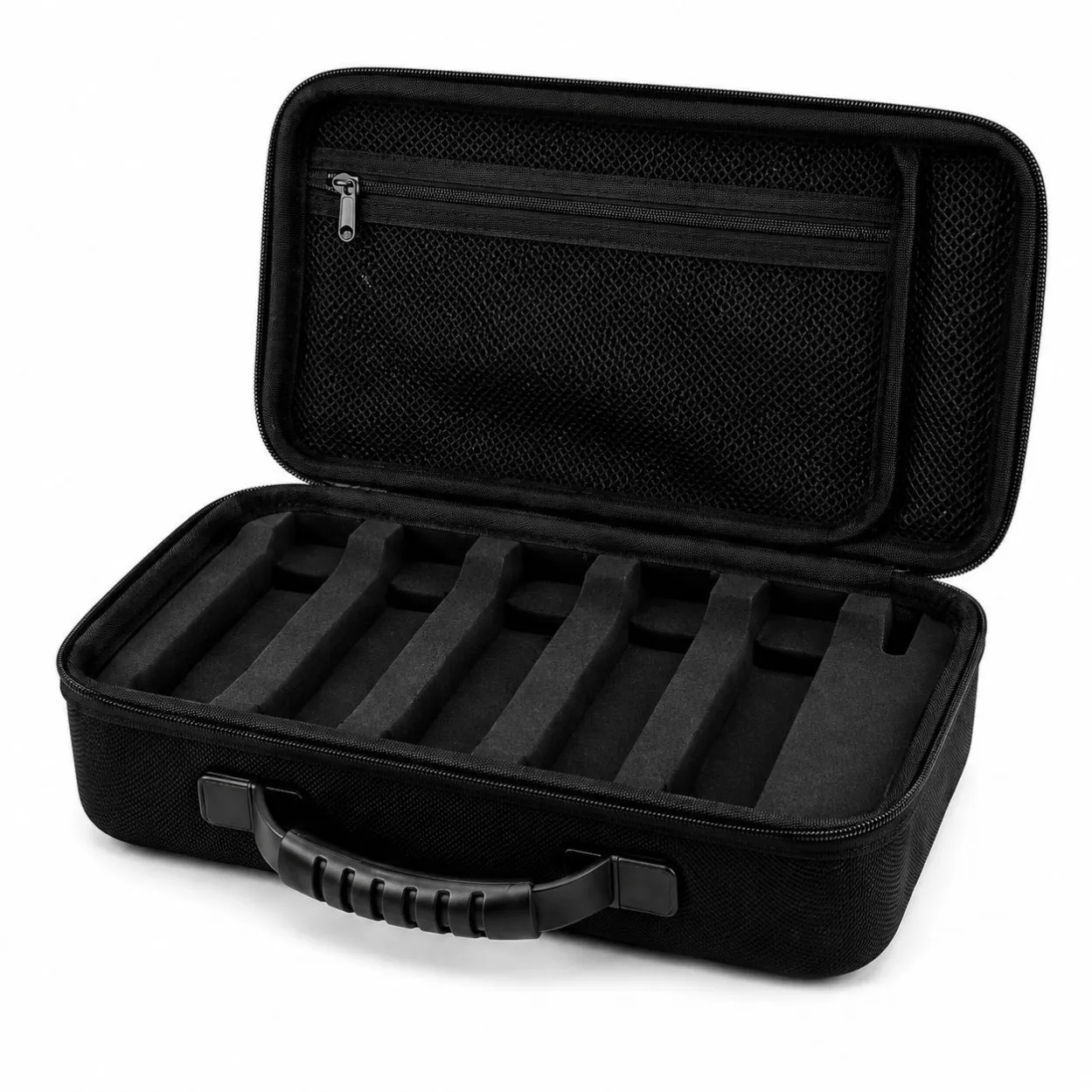
The shell and foam receive most of the attention in a custom EVA case, but everyday usability often depends on smaller details.
The zipper, handle and carrying method should match the product weight, case size and how the equipment will actually be used.
Start With the Loaded Case
Do not select a handle or strap based only on the empty case.
Consider the complete loaded set:
- Main device
- Chargers
- Batteries
- Cables
- Tools
- Accessories
A small lightweight case and a large equipment kit may require very different carrying solutions.
Choose the Zipper Around Access
The zipper affects how easily the user can open and close the case.
Before confirming the design, consider:
- Case size
- Opening direction
- Single or double zipper pulls
- Frequency of access
- Interior height
- Position of accessories near the lid
For equipment that is frequently used in the field, easy access may be more important than decorative zipper details.
Match the Handle to the Case
Common handle directions can include fabric, rubber, plastic or other project-specific constructions.
The right option depends on:
- Loaded weight
- Carrying frequency
- Case dimensions
- Brand appearance
- Attachment position
For heavier equipment, handle attachment and case balance become particularly important.
When Is a Shoulder Strap Useful?
A shoulder strap can be useful when:
- The case is carried for longer periods
- The user needs both hands free
- The equipment kit is larger
- The case is frequently transported between locations
Not every case needs one.
Adding features that are rarely used can increase complexity without improving the product.
Consider Weight Distribution
The position of the equipment inside the case affects how the case feels when carried.
If a heavy device is placed far to one side, the case may feel unbalanced even if the handle itself is strong enough.
The interior layout and carrying method should therefore be reviewed together.
Check These Details During Sampling
Before approving the sample, test the case with the complete product set inside.
Check:
- Zipper opening and closing
- Handle comfort
- Loaded balance
- Strap position
- Access to the product
- Interference between accessories and the lid
- Overall carrying experience
A feature that looks good in a drawing may feel different once the case is fully loaded.
What Information Helps Us Review Carrying Options?
Provide:
- Product dimensions
- Complete loaded weight
- Accessory list
- Case orientation
- Intended carrying method
- Estimated quantity
This helps determine which zipper, handle and carrying details are practical for the project.
Developing a Case for Professional Equipment?
Send us your confirmed product dimensions, loaded weight, accessory list and estimated quantity.
We can review the case structure, interior layout and carrying details together before sampling.
Request a Quote →